Warmer Winters, Shorter Seasons: The Future of Skiing in Japan
A Winter That Felt Short
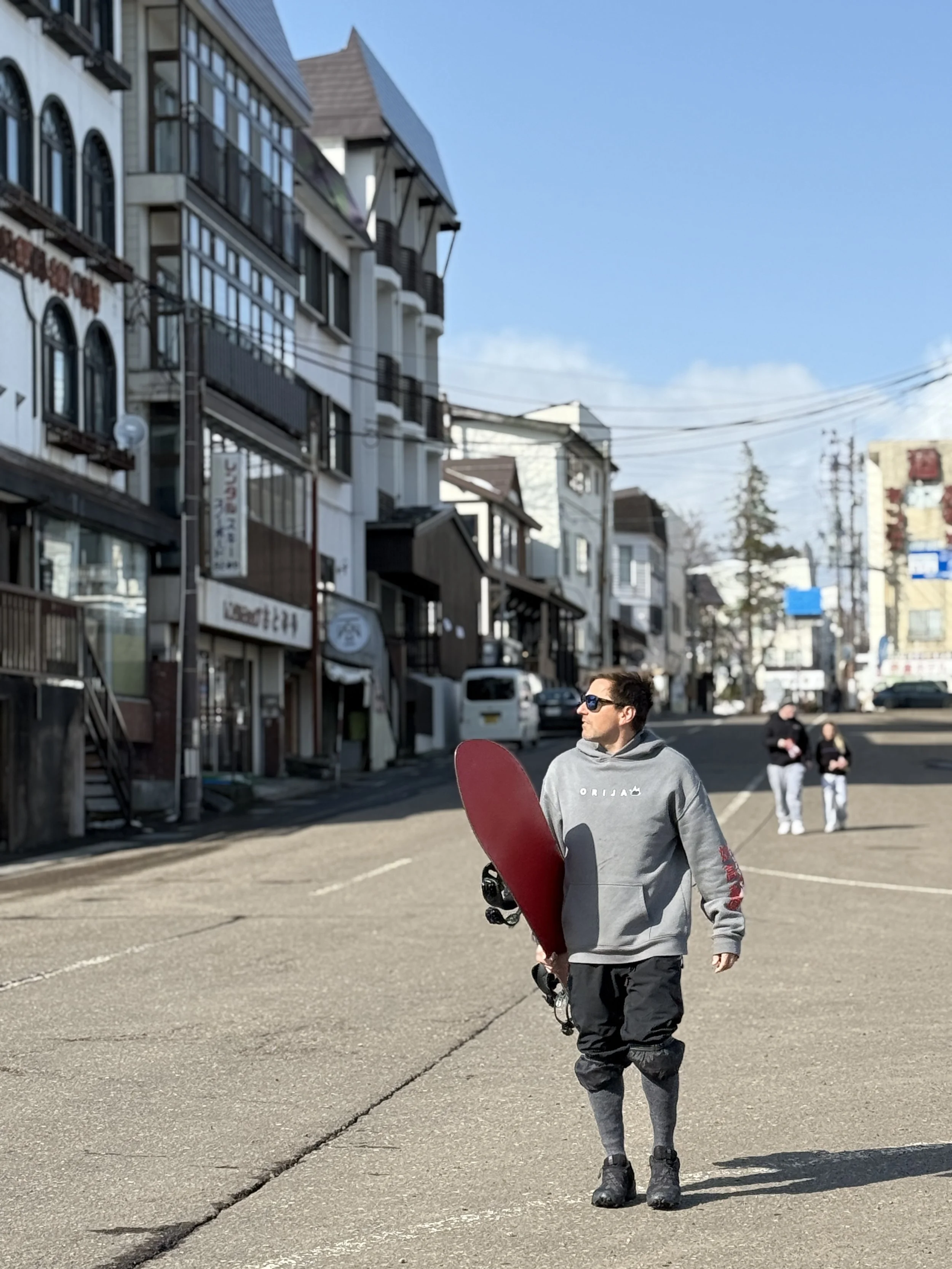
This winter in Japan felt unusually short. In many areas it felt like there were only four to six weeks of consistently good riding. Warm periods broke up the season and the window for reliable conditions felt narrower than expected.
A single season does not define a long term trend, but it does raise questions about what winters in Japan may look like in the future.
Japan Has Already Lost 40% of Its Ski Resorts
The ski industry in Japan has already undergone major structural change.
Since the late 1990s, the number of ski resorts in Japan has declined by roughly 40 percent. The peak years of the industry were during Japan’s economic bubble, when skiing was extremely popular among domestic travelers and many resorts were built across the country.
After the bubble economy collapsed, participation dropped sharply and many smaller resorts were no longer financially sustainable. Over time hundreds of ski areas closed.
This decline began as an economic issue, but today another factor is increasingly part of the discussion.
Climate Change and Snowfall in Japan
Recent research suggests that warming temperatures are beginning to influence snowfall patterns in Japan.
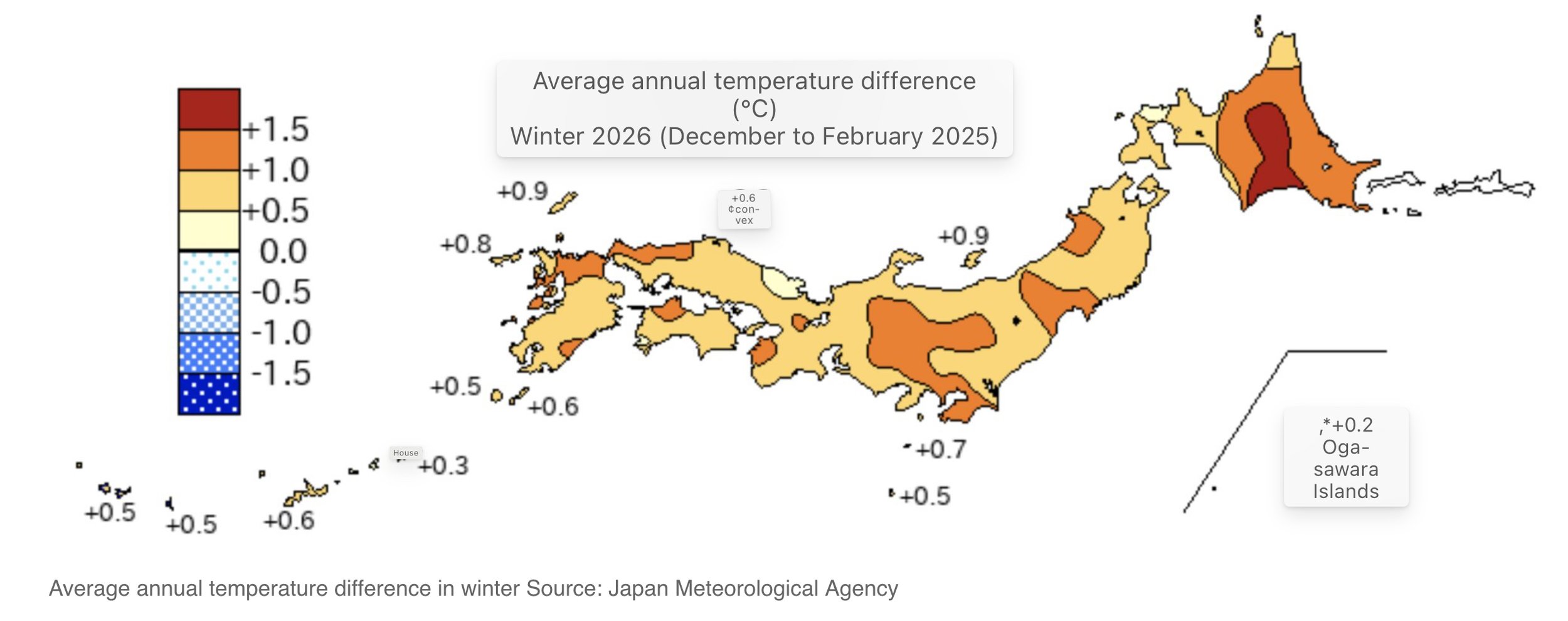
According to the Japan Meteorological Agency, winters are warming overall. The Japan Meteorological Agency reports clear warming trends:
Japan’s average temperature has risen about 1.3°C since 1898.
Snow cover duration is declining in many regions.
Winters are becoming shorter and warmer overall.
However, snowfall events can still be intense because warmer air can hold more moisture. When cold air arrives, storms can produce heavy snow.
A recent analysis by the JMA reported that snowfall during a major winter event increased by about 7 percent due to warming driven moisture increases.
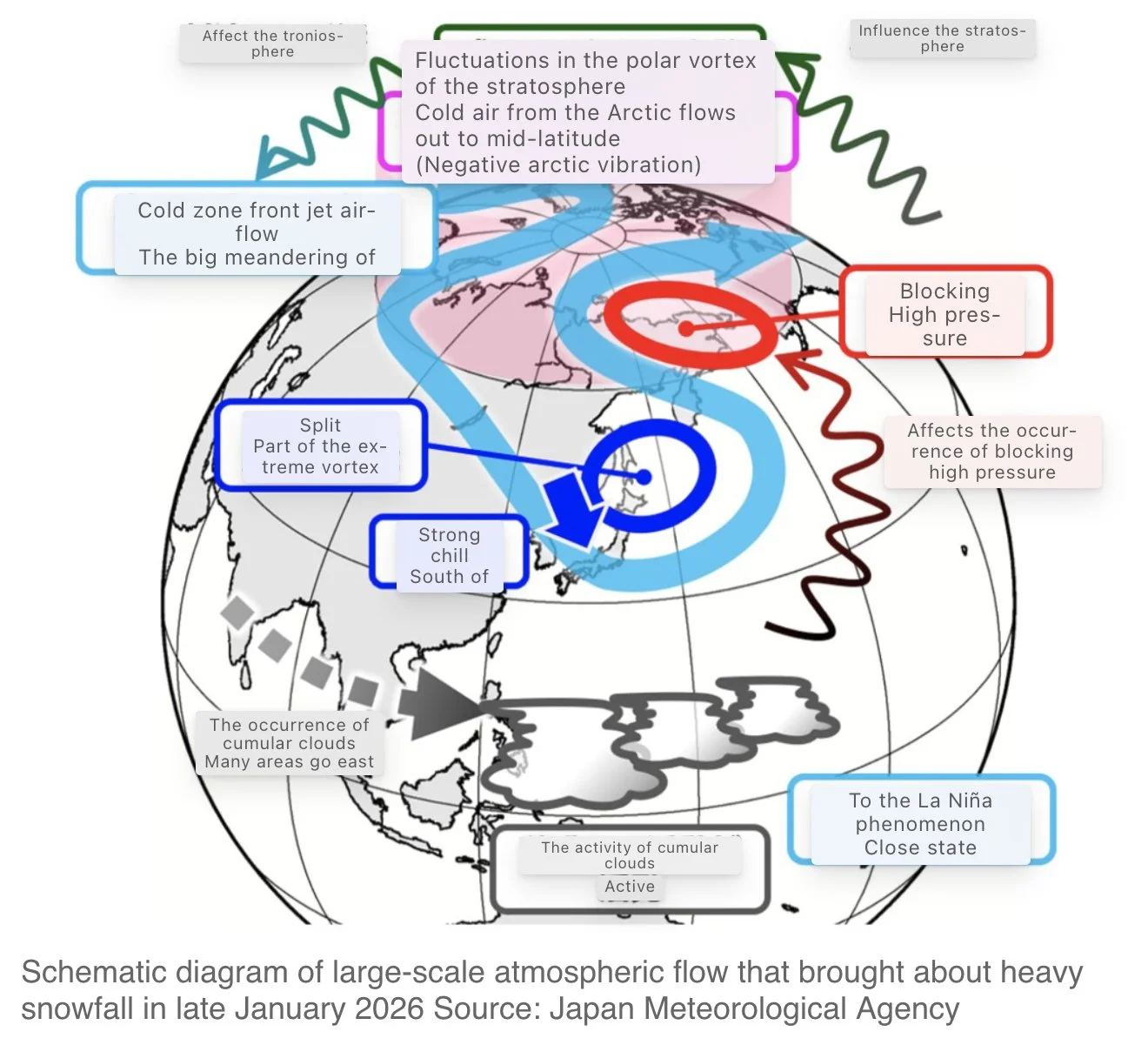
This creates an unusual dynamic. Winters may feel shorter or less predictable, but when the right conditions occur, storms can still produce significant snowfall.
The Global Rise of “Japow” Marketing
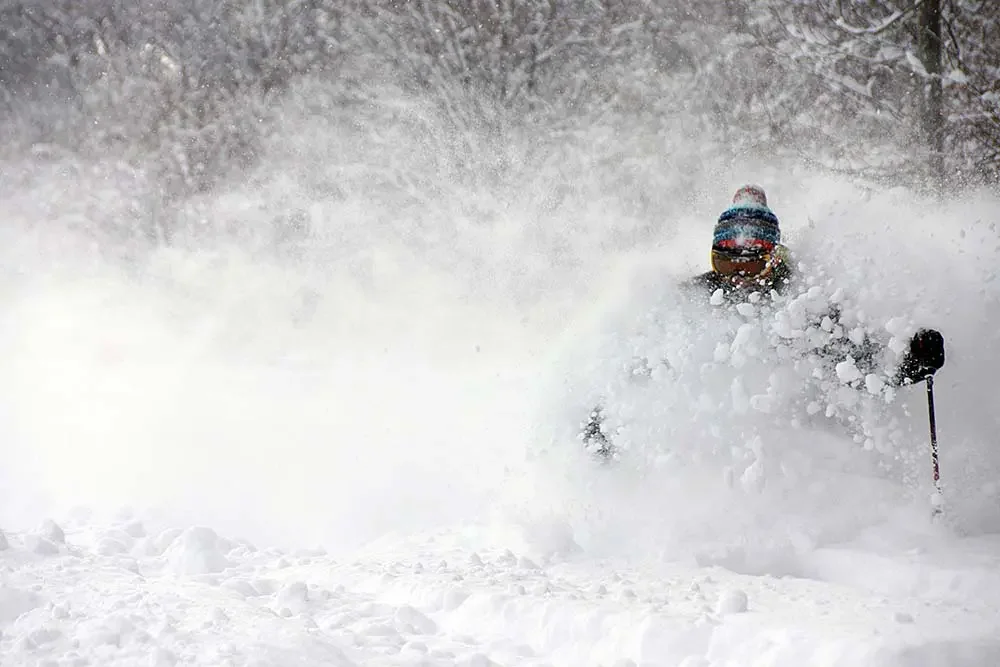
For many international visitors, the image of skiing in Japan is closely tied to the idea of deep powder snow.
The popular term “Japow” helped introduce this reputation to the world. The word was actually coined by Western skiers and snowboarders and is rarely used within Japan itself. It became a shorthand way to describe the light, dry powder that many regions receive during winter.
This global branding has played an important role in bringing international attention to Japan’s mountains.
International Investment and the Revival of Ski Towns
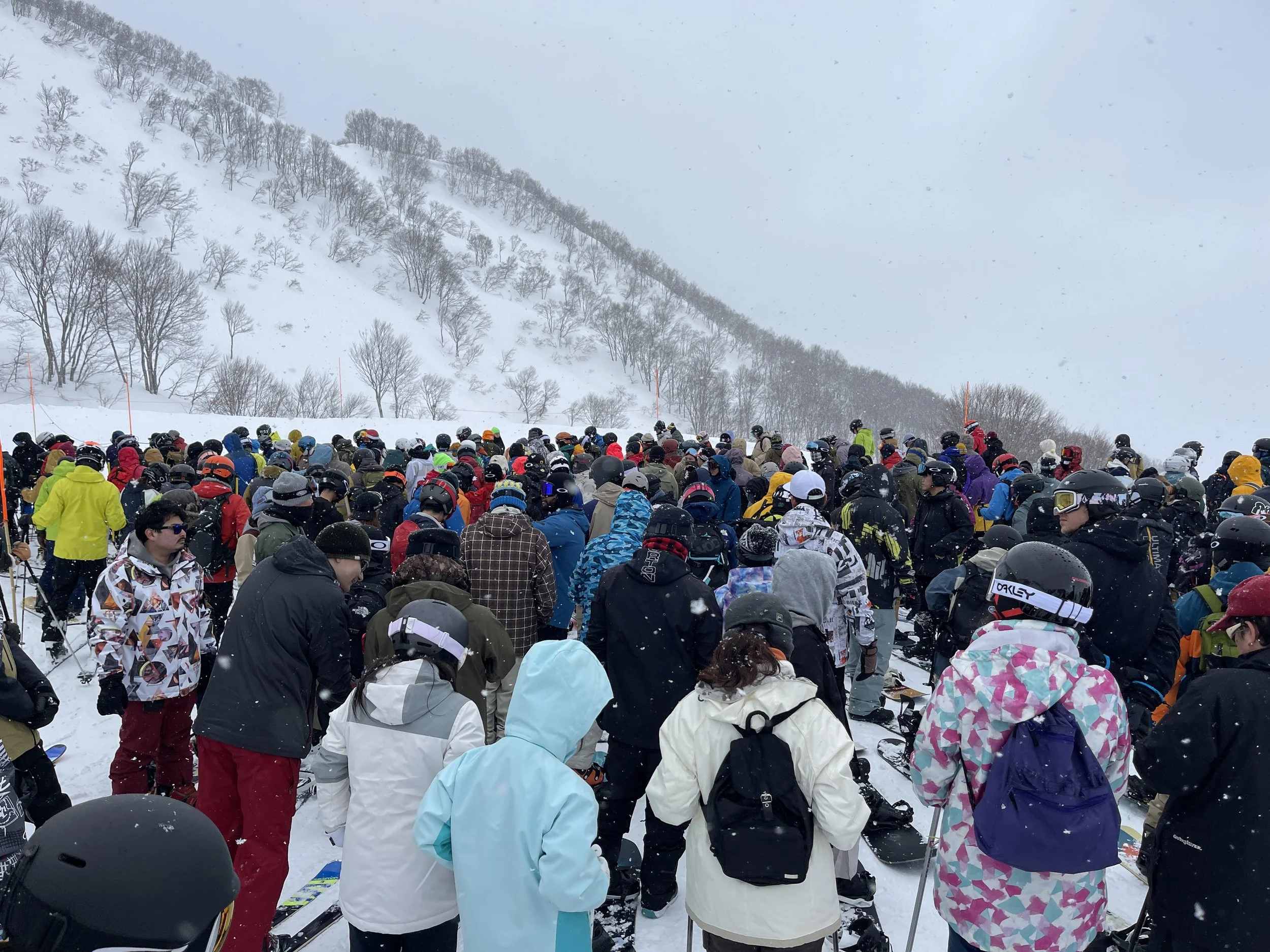
In recent years several ski destinations have seen renewed growth through international tourism and investment.
Places such as Niseko, Hakuba, and Myoko have attracted overseas visitors who are looking for a combination of powder snow and cultural travel experiences. Foreign investors and tourism businesses have also helped promote these destinations internationally.
This global interest has helped some areas recover from the long decline that followed the collapse of Japan’s domestic ski boom. However, there has been a massive shift in ski towns with the boom of foreign tourists as a new ski era unfolds which has lead to overtourism in the well known ski areas.
Local Communities and New Challenges
While international investment brings energy and opportunity, it also introduces new challenges for mountain communities.
In places like Myoko, local governments have begun encouraging domestic businesses to start or expand in the region so that communities can remain locally driven rather than relying entirely on outside investment.
At the same time, the growing interest in rural property has created new pressures. The recent surge in purchasing akiya homes by international buyers has drawn attention and capital to rural areas, but it has also raised concerns about housing affordability and long term community balance.
On top of this, locals are concerned about the behaviours of those who have simply bought into communities yet have had no experience of living in Japan to help adapt to society.
These dynamics are shaping how ski towns evolve.
The Future of Winter in Japan
Snow will likely remain the main reason visitors travel to Japan’s mountains. But the long term strength of these destinations may depend on something broader than snowfall alone.
Culture, food, traditions, and the experiences locals share with visitors can define what makes a place memorable.
If winters become more variable, these deeper elements of place may become even more important.
Japan’s mountain towns have always offered far more than just skiing. The question now is how those communities shape the next era of winter tourism.
A Question for Winter Snow Visitors
For many people around the world, Japan has become a dream winter destination.
But if you were planning a winter trip here in the future, what would matter most to you?
Is it the deep powder that first captured global attention, or is there something more you would hope to discover in these mountain towns?